
Upcoming PIE-OT Information Sessions
These sessions are designed for internationally-educated OTs (IEOTs) and those who support them.
Find out how the program could support your preparation for the ACOTRO SEAS competency assessment and prepare you for work as an occupational therapist in Canada.
Hear about the PIE-OT program structure, what and how you will learn, and get tips to help you prepare your application to the program in one of our online information sessions.
Led by Professor of Teaching Michael Lee and PIE-OT Program Manager Somaya Malkawi.

Next Start Date:
January 2027
What is PIE-OT?
The UBC Program for Internationally-Educated Occupational Therapists (PIE-OT) is a 12-week, expert-led, 100% online course designed to support occupational therapists through the Canadian SEAS program and prepare you to be an OT in Canada.
- Part-time over 12 weeks
- 100% online
- Join from wherever you are in the world
- Make global connections in small cohorts
- Created by OTs for OTs
- Curriculum designed by senior faculty members
- All areas of OT represented and explored
- Expert-led lectures and facilitated group discussions
After completing the program, 85% of our learners pass the competency assessment at the first sitting, and 100% pass at the second sitting.
Find out more about the impact of PIE-OT through our research
How can the PIE-OT course help me?
Before practicing as an occupational therapist (OT) in Canada, internationally educated OTs are required to successfully complete the Canadian SEAS program. This is a process to assess your educational qualifications and competencies to determine that they are substantially equivalent to an OT educated in Canada. Once complete, you will then be eligible to write the National Occupational Therapy Certification Examination (NOTCE) to be qualified to practice in Canada.
PIE-OT is designed to support you, as an Internationally-Educated OT (IEOT) for Phase Three of the SEAS program, the competency assessment, which is an up to 6.5 hour interview-style assessment.
You will learn and understand the practice standards, protocols, ethics of practice, and professional and educational frameworks required to pass the competency assessment.
We will guide you through pre-recorded features, exercises, and readings, and you will attend weekly online sessions with an instructor to explore content areas, ask questions and apply your knowledge to case studies.
“I really loved the modules as they will not just help me in the Competency Assessment but also as a future occupational therapist here in Canada.”
At the end of the PIE-OT course, you should feel confident about the nuances of Canadian OT practice and be ready to take the SEAS competency assessment.
The curriculum was designed by senior professors from the UBC Department of Occupational Science and Occupational Therapy, and specialized content is regularly validated with a broad cross-section of faculty members and clinicians.
“I don’t have much time to study anymore but due to the non-demanding structure the PIE-OT provided I managed to push myself to review and learn without it being a stressor itself.”
How do I apply to PIE-OT?
To apply, you will need to have:
- Completed phase one and invited to continue onto phase two of the SEAS program (email evidence from ACOTRO required).
- Achieved a level of education in OT that is at least equivalent to a Canadian bachelor’s degree (this will be confirmed by your completion of phase one).
- Met the minimum English requirements as set out by ACOTRO for the SEAS program.
The application process is simple and straightforward:
- Review Eligibility: Make sure you meet the eligibility criteria listed above.
- Prepare Your Application: Gather any necessary documents and information.
- Submit Your Application: Complete the application form.
Completing the application form does not guarantee you a spot on the program. If you have any questions or need assistance, our program coordinator is here to help.
Starting the program
Prior to beginning the program, you will meet with PIE-OT administrators to informally discuss your strengths and weaknesses, and any specific needs. This will help identify any additional pre-requirements you may need to address prior to beginning the program and help to create an individualized learning plan.
Please note: The introduction module content must be completed before joining any other modules. You are also strongly encouraged to complete ALL modules prior to taking your SEAS competency assessment.
Course structure
- The 12-week program is delivered virtually through:
- Weekly self-directed content, including pre-recorded lectures, readings, podcasts, videos (approximately 1-3 hours per week).
- Live virtual tutorial session where you can engage in a Q&A with the facilitator on the week’s learning, work through case studies based on the week’s learning and relevant competencies, and bring your own experiences to discuss (approximately 21 hours in total).
- The program also offers:
- Mid-program office hours, where you can discuss progress and raise questions about material covered.
- Capstone in the final three weeks of the program, where you will have the opportunity to attend a one-to-one mini mock interview (with a similar format as the competency assessment) to practice what you have learned and apply it to case studies.
“Guidance throughout the program has been exceptional. Whether it was through the insightful feedback on my assignments, the one-on-one advising sessions, the live tutorials, and the constant encouragement, I always felt supported and well-directed.”
Course Cost
Our online program is competitively priced at $3,500 (CAD), offering exceptional value for the comprehensive education and resources you’ll receive.
Planning to settle in British Columbia (BC), Canada? You may be eligible for reimbursement opportunities through Health Match BC.
Planning to settle or already landed in Saskatchewan (SK), Canada? You may be eligible for re-certification financial aid through SK’s International Credential Recognition Grant.
Resources
S.U.C.C.E.S.S. Active Career Connect and Engagement Project for Internationally Educated Health Professionals (ACCEP-IEHP) offers financial support, including wage subsidies, and additional services for newcomer internationally-educated OTs.
Contact Us
If you have any questions about the program, please contact our Program Coordinator.
Meet the PIE-OT Team
Find out more about the team behind the program.

Michael Lee
Professor of Teaching, Program Director and Curriculum Lead

Dr. Somaya Malkawi
PIE-OT Program Manager and Facilitator

Dr. Susan Forwell
Professor,
Curriculum Consultant

Alicia Myburgh
PIE-OT Facilitator, specializing in paediatrics

Dr. Jeffrey Tse
PIE-OT Facilitator, specializing in community-based rehabilitation

Andrea Hatton-Jones, PIE-OT Facilitator, specializing in mental health and return-to-work

Sarah Rath, PIE-OT Facilitator, specializing in home health

Amanda Xue
PIE-OT Program Coordinator

Tanya Fawkes
Assistant Professor of Teaching, Curriculum Consultant
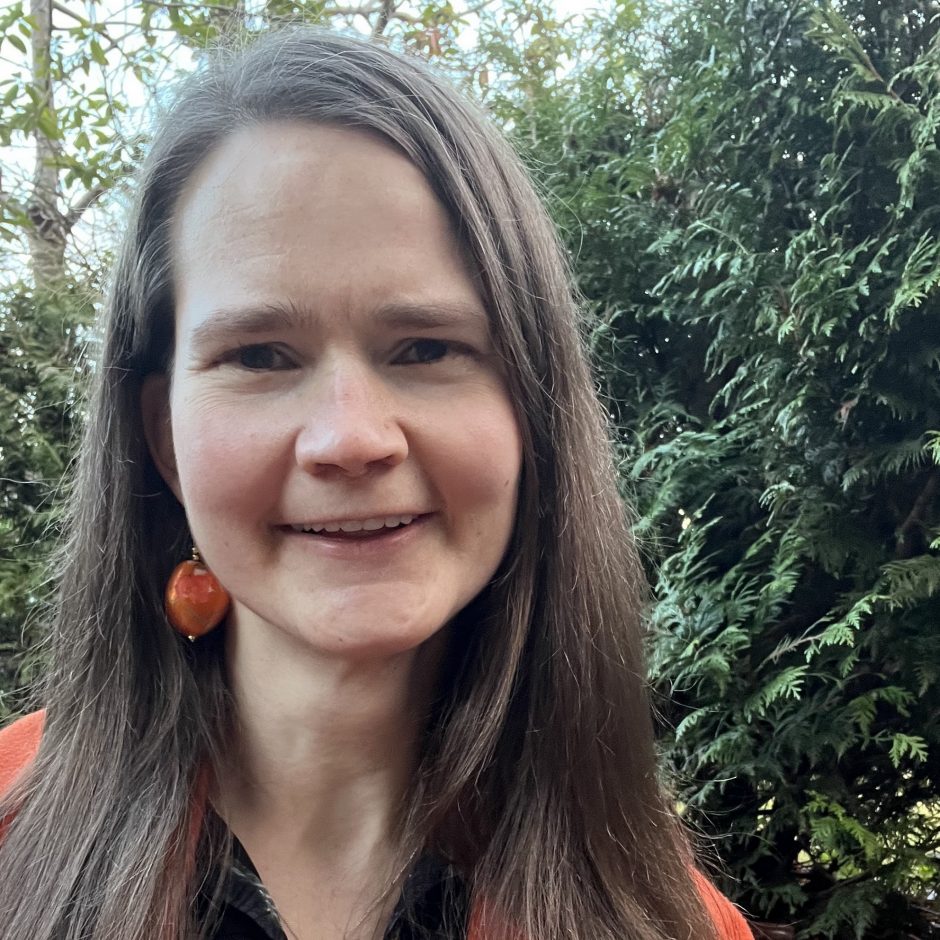
Dr. Laura Bulk
Assistant Professor of Teaching, Curriculum Consultant

Jay MacDonald
Assistant Professor of Teaching, Curriculum Lead
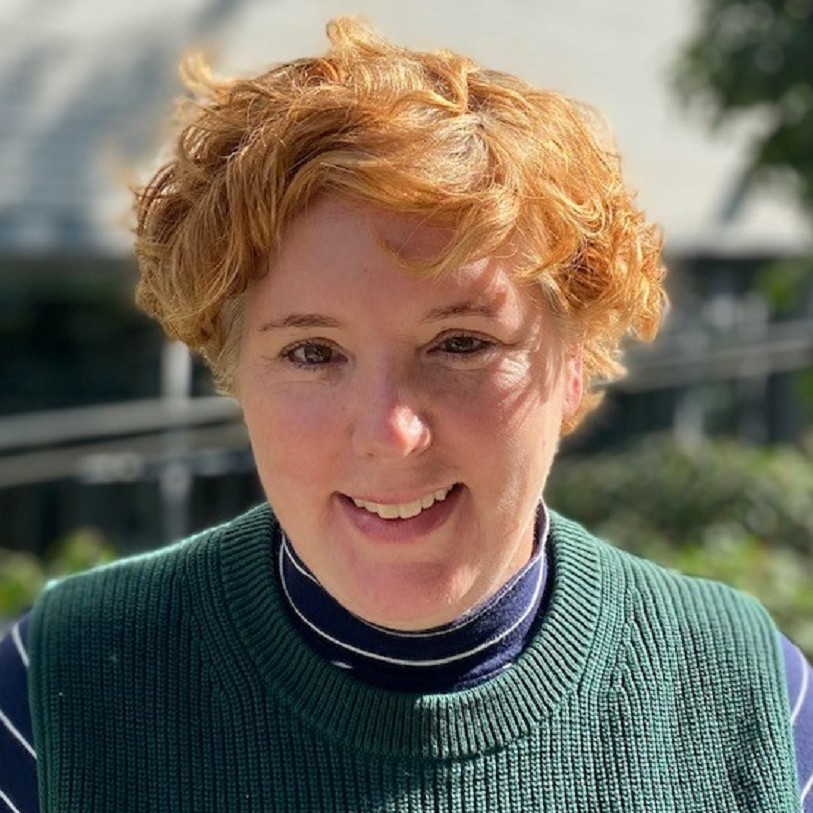
Alexis Davis
Assistant Professor of Teaching,
Curriculum Consultant

Read our research into the impact of PIE-OT
As the team present at the 19th World Federation of Occupational Therapy congress, learn about the impact of the program on participants and their later success in the SEAS competency assessment.